Heating bill spikes in winter happen because heating systems run longer and harder in cold weather, while utility rates and household energy use climb at the same time. The U.S. Energy Information Administration tracks this pattern every year, and the 2025-26 season confirmed it sharply.
Average household heating costs are projected to rise 9.2% in 2026. Electric heating is up 12.2%, pushing the average electric heating bill to $1,223 for the season.
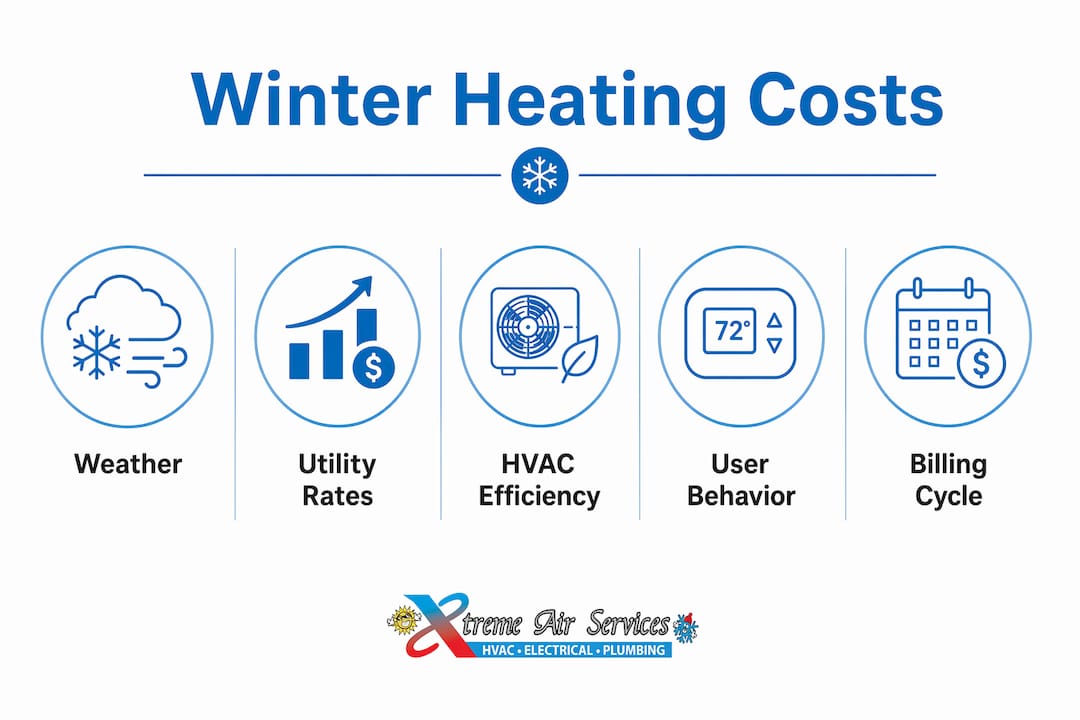
Understanding why heating costs increase in winter means looking at four forces: weather patterns, utility pricing, equipment condition, and how people actually use their homes when it gets cold.
Why heating bill spikes in winter: the core drivers explained
Cold weather is the most direct driver of a winter heating bill spike, but it is not the only one. Heating Degree Days (HDDs) are the industry-standard way to measure how much energy a home needs to stay warm.
An HDD is calculated by subtracting the average daily temperature from a 65°F baseline. The more HDDs a region racks up in a month, the longer furnaces and heat pumps must run to keep you comfortable.
January 2026 showed this effect at an extreme scale. Heating demand during cold snaps reached 115% to 150% of historical averages across parts of the eastern and central U.S., with roughly 290 more HDDs than January 2025 in affected regions.
That means furnaces in those areas ran nearly nonstop for weeks. A system that normally cycles on and off every 15 minutes ran continuously, burning fuel at a rate most homeowners never see in milder months.
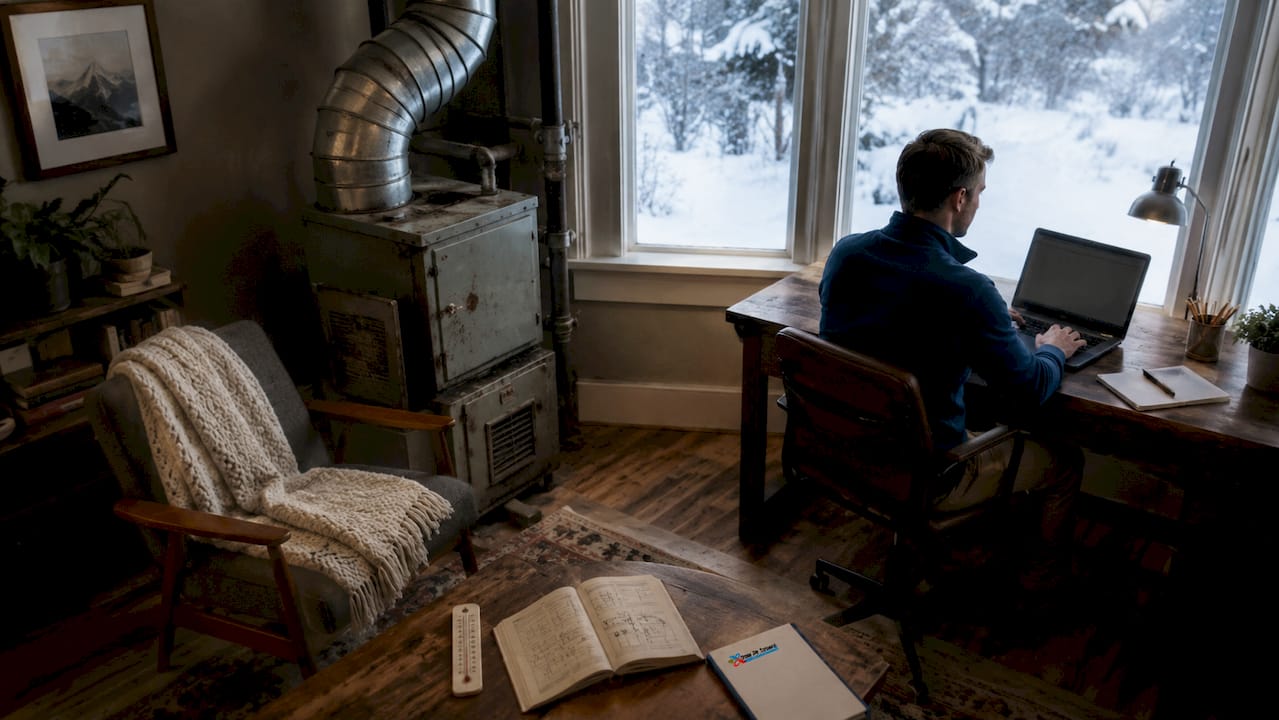
Region matters here too. A homeowner in Dallas, Texas, faces a very different winter energy profile than one in Minneapolis, Minnesota.
Southern states see fewer HDDs on average, but their homes are often built with less insulation and heating systems sized for mild winters. When a genuine cold snap hits, those systems struggle to keep up. They run at maximum output for extended periods, driving bills far higher than northern homeowners might expect.
| Region | Avg. Winter HDDs | Typical Heating Season Length |
|---|---|---|
| Northeast (e.g., Boston) | 4,500 to 5,500 | October through April |
| Midwest (e.g., Chicago) | 5,000 to 6,500 | October through April |
| South (e.g., Dallas) | 1,500 to 2,500 | December through February |
| Pacific Northwest (e.g., Seattle) | 2,500 to 3,500 | November through March |
Pro Tip: Check your utility bill for actual HDD data. Many providers print it alongside your usage. Comparing HDDs month-over-month tells you whether a bill increase is weather-driven or something else entirely.
How utility rate hikes and market forces push costs higher
Utility rate hikes push your bill higher even when your home uses the exact same amount of energy. Utility companies requested nearly $31 billion in electric and gas rate increases in 2025, roughly twice the 2024 level, affecting 81 million Americans.
That is not a temporary blip. It reflects years of deferred infrastructure investment, rising wholesale energy costs, and new demand sources that utilities are now passing on to residential customers.
Several specific market factors are driving this:
- Wholesale electricity costs have risen 267% over five years, driven by fuel price volatility and grid infrastructure spending.
- Natural gas service costs rose 10.8% year-over-year as of December 2025, while electricity climbed 6.7% in the same period.
- Data center electricity demand has surged with AI infrastructure buildout, competing with residential demand on the same grid and pushing wholesale prices higher.
- Energy delivery charges and infrastructure maintenance fees are passed through by utilities and can increase bills seasonally, independent of how much energy you actually consume.
“The rate increases we’re seeing aren’t just about fuel costs. They reflect decades of underinvestment in grid infrastructure, now being paid for by ratepayers all at once.” — Energy policy analysts cited by AccuWeather, January 2026
One factor that confuses many homeowners is billing cycle length. Cycles vary from 27 to 35 days, so a bill covering 35 days always looks higher than one covering 27 days, even when daily usage is identical.
Before you assume your consumption spiked, check the number of days in your billing period. Comparing the same calendar month year-over-year gives a far more accurate picture of genuine usage changes.
Does your HVAC system make winter bills worse?
Yes, a neglected HVAC system can make winter bills worse, and equipment condition is the factor homeowners control most directly. An unmaintained furnace may operate at 70% efficiency or worse, meaning 30 cents of every fuel dollar escapes up the flue as wasted heat rather than warming your home.
A well-maintained system rated at 95% AFUE (Annual Fuel Utilization Efficiency) keeps nearly all of that energy working for you. Choosing ENERGY STAR certified furnaces when it is time to replace equipment helps lock in that efficiency long term.
Here are the most common equipment-related causes of high winter heating bills, ranked by frequency:
- Clogged air filters. Partially clogged filters restrict airflow silently, forcing blower motors to work harder and raising energy consumption. Check filters monthly during winter, not just seasonally.
- Leaky ductwork. The U.S. Department of Energy estimates that typical duct systems lose 20% to 30% of conditioned air through leaks, gaps, and poorly connected sections before it reaches living spaces.
- Insulation gaps and air leaks. Attic insulation below R-38 and unsealed penetrations around pipes, wiring, and recessed lights allow heat to escape continuously. This forces your system to run longer to compensate.
- Wrong system size. Oversized HVAC systems cycle inefficiently, while undersized systems run nonstop. Both scenarios waste energy and drive higher bills. Proper sizing requires a Manual J load calculation performed by a licensed HVAC technician.
- Aging equipment. A furnace more than 15 years old likely operates well below its original efficiency rating due to component wear, heat exchanger degradation, and burner fouling. Signs your HVAC needs replacement include rising bills alongside declining comfort.
Pro Tip: Schedule a furnace tune-up before winter rather than after your first high bill. Technicians can catch efficiency losses, cracked heat exchangers, and failing components before they cost you hundreds in wasted fuel.
One often-overlooked contributor is phantom standby load from idle electronics. Televisions, gaming consoles, and smart home devices draw power continuously even when they are not in active use.
This does not affect gas heating bills directly. But it adds measurable cost to electric bills during winter months, when homes are occupied more.
How your daily habits drive up winter energy costs
Your daily habits drive up winter energy costs mainly through more time indoors and heavier use of supplemental heaters. Household behavior changes significantly in winter, and those changes show up directly on your bill.
More time spent at home and the use of supplemental heating devices like space heaters increase winter energy usage in ways that catch many homeowners off guard.
The thermostat is the single biggest behavioral lever you control. The U.S. Department of Energy recommends 68°F when you are home and awake, and 60°F when you are away or asleep.
Smart thermostats set at these levels can save approximately 8% annually on heating and cooling costs. That translates to roughly $80 to $100 per year for the average household, and the savings compound over time.
Several behavioral patterns consistently drive higher winter bills:
- Cranking the thermostat up after coming in from the cold. Setting it to 78°F when you walk in does not heat the home faster. It just runs the system longer and overshoots your comfort target.
- Using portable electric space heaters in multiple rooms. A single 1,500-watt space heater running eight hours per day adds roughly $45 to $55 per month to an electric bill at average U.S. rates. Two or three of them running simultaneously can cost more than central heating.
- Leaving interior doors open in unused rooms. Heating rooms you are not occupying wastes energy. Closing doors and adjusting vents in unused spaces reduces the volume your system must heat.
- Blocking vents with furniture. Sofas, rugs, and bookshelves placed over floor vents restrict airflow and force the system to run longer to reach the thermostat setpoint.
Occupancy patterns also shift in winter. Remote workers, school-age children home for breaks, and holiday gatherings all mean more people generating heat, cooking, and using hot water. Each activity adds to total energy consumption.
Track your usage through your utility’s online portal, which most major providers now offer. It shows you exactly which days and times consumption peaks.
Key takeaways
Winter heating costs rise because cold weather, rising utility rates, equipment inefficiency, and behavioral changes all compound at the same time.
| Point | Details |
|---|---|
| Weather drives the baseline | More Heating Degree Days mean longer furnace runtimes and higher fuel consumption regardless of other factors. |
| Utility rates amplified costs in 2026 | Rate requests totaling $31 billion in 2025 pushed electric and gas costs higher for 81 million Americans. |
| Equipment condition is controllable | An unmaintained furnace can waste 30 cents per dollar on fuel; annual tune-ups prevent this loss. |
| Thermostat habits matter | Setting 68°F when home and 60°F when away saves approximately 8% annually on heating and cooling. |
| Billing cycles can mislead | A 35-day billing cycle always looks higher than a 27-day cycle; compare year-over-year, not month-to-month. |
What years of HVAC work taught me about winter bills
After working with hundreds of homeowners on heating systems, the pattern I see most often is simple. People call us in January, when their bill is already high, rather than in October, when we could have prevented it.
By the time the bill shock hits, the system has already been running inefficiently for weeks.
The uncomfortable truth about winter heating costs is that most spikes are predictable. By the time bill shock arrives, a few issues are almost always at work:
- A furnace that has not been serviced in two or three years is almost certainly operating below its rated efficiency.
- Ductwork that has never been inspected is almost certainly leaking.
- Attic insulation installed in the 1990s is almost certainly below current recommended levels.
None of these issues announce themselves. They just quietly add 20% to 40% to your heating bill every single winter.
What I tell every homeowner is this: your heating bill is a report card for your home’s thermal performance. A sudden spike is not bad luck. It is your home telling you something specific.
The most common culprits I find during HVAC diagnostic visits are dirty heat exchangers, collapsed duct sections, and thermostats that read temperatures incorrectly. All of these are fixable. None of them are expensive to address if caught early.
The homeowners who consistently pay the lowest winter heating bills are not the ones with the newest equipment. They are the ones who treat their HVAC system like a car.
That means scheduled maintenance, filter changes on a calendar, and professional inspections before the season starts. That discipline pays for itself every single winter.
— Xtreme
Stop the spike before next winter hits
If heating bill spikes in winter left you paying more than expected, the time to act is now, not next December. Xtremeairservices offers HVAC maintenance plans designed specifically to catch the efficiency losses that drive winter bill spikes before they cost you money.
A professional tune-up covers heat exchanger inspection, burner cleaning, airflow testing, and thermostat calibration, all of the issues that silently inflate your bill month after month.
Xtremeairservices serves homeowners and businesses across Dallas, Plano, Irving, and Sunnyvale, TX, with HVAC, electrical, and plumbing services.
Scheduling a maintenance visit now means your system enters next winter running at full efficiency, not at 70% with a $300 monthly bill to show for it. Contact Xtremeairservices today to review your options and get ahead of next season’s costs.
FAQ
Why does my heating bill spike so much in January?
January typically brings the highest Heating Degree Day counts of the year, forcing furnaces to run nearly continuously during cold snaps. In January 2026, heating demand in parts of the eastern and central U.S. reached 150% of historical averages, which directly translates to higher fuel consumption and higher bills.
How much do utility rate increases add to my winter heating bill?
Utility companies requested nearly $31 billion in rate increases in 2025, affecting 81 million Americans. Wholesale electricity costs rose 267% over five years, meaning a portion of your higher bill reflects rate changes rather than anything you did differently at home.
Can a dirty furnace filter really raise my heating bill?
Yes. A partially clogged air filter restricts airflow and forces the blower motor to work harder, increasing energy consumption measurably. Check your filter monthly during winter, not just at the start of the season.
What thermostat setting saves the most on heating costs?
The U.S. Department of Energy recommends 68°F when you are home and awake, and 60°F when you are asleep or away. Using a smart thermostat to maintain these setpoints consistently saves approximately 8% annually on heating and cooling costs.
How do I know if my HVAC system is causing my high winter bills?
An aging or unmaintained system operating at 70% efficiency or below is a primary cause of unexplained bill increases. Signs include bills rising year-over-year without colder weather to explain it, uneven heating across rooms, and a system that runs constantly without reaching the set temperature. A professional diagnostic visit from Xtremeairservices can identify the specific cause.