

If your AC broke in the house, do three things immediately: get people and pets to the coolest room, run a 5-minute homeowner triage (thermostat, breaker, filter), and set up a fan or portable cooler while you decide whether to call a pro.
The short version:
- Under 5 minutes: Check the thermostat (set to COOL, below current room temp, fresh batteries), then check the breaker panel for a tripped breaker and reset it once. These two checks alone resolve a surprising share of no-start calls.
- 5–15 minutes: Inspect the air filter (replace if gray and clogged), check that all supply vents are open, and glance at the indoor drain pan for standing water.
- 15–30 minutes: If none of those fix it, set up temporary cooling (fans, window unit, portable AC) and call a licensed HVAC technician.
Safety warning — stop immediately if you see any of these: burning smell, sparking, hissing near the refrigerant lines, or a breaker that trips again right after you reset it. Per OSHA guidance, work on capacitors, refrigerant lines, and internal electrical panels carries severe shock and fire risk. Leave those to a licensed tech.
If indoor temps climb above 85°F and you have elderly family members, young children, or anyone with a heart or respiratory condition in the home, don’t wait for a repair. Get them to an air-conditioned space now.
Table of Contents
- What can you safely check when your AC stops working?
- What do your AC symptoms actually mean?
- When should you call a licensed HVAC tech or electrician?
- How much does AC repair cost, and should you repair or replace?
- Key Takeaways
- What technicians actually see during heat wave calls
- Xtremeairservices is ready for your Dallas-area AC emergency
- Useful sources
- FAQ
What can you safely check when your AC stops working?
This checklist covers the fixes that resolve most common AC failures without requiring tools beyond a screwdriver and a flashlight. Work through them in order.
1. Thermostat settings and batteries (5 minutes)
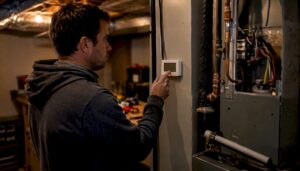
Set the thermostat to COOL, fan to AUTO, and the temperature below the current room reading. If the screen is blank or flickering, swap the batteries first. A dead thermostat battery is one of the most common reasons a system appears completely dead.
2. Breaker and outdoor disconnect (5–10 minutes)
Go to your electrical panel and look for the breaker labeled “AC,” “Air Handler,” or “Condenser.” If it’s tripped (sitting between ON and OFF), flip it fully OFF, wait 30 seconds, then flip it back ON. Check the outdoor disconnect box near the condenser unit too — it has a pull-out fuse block that sometimes gets bumped or corrodes loose. Pull it out, inspect the fuses visually, and reseat it firmly.
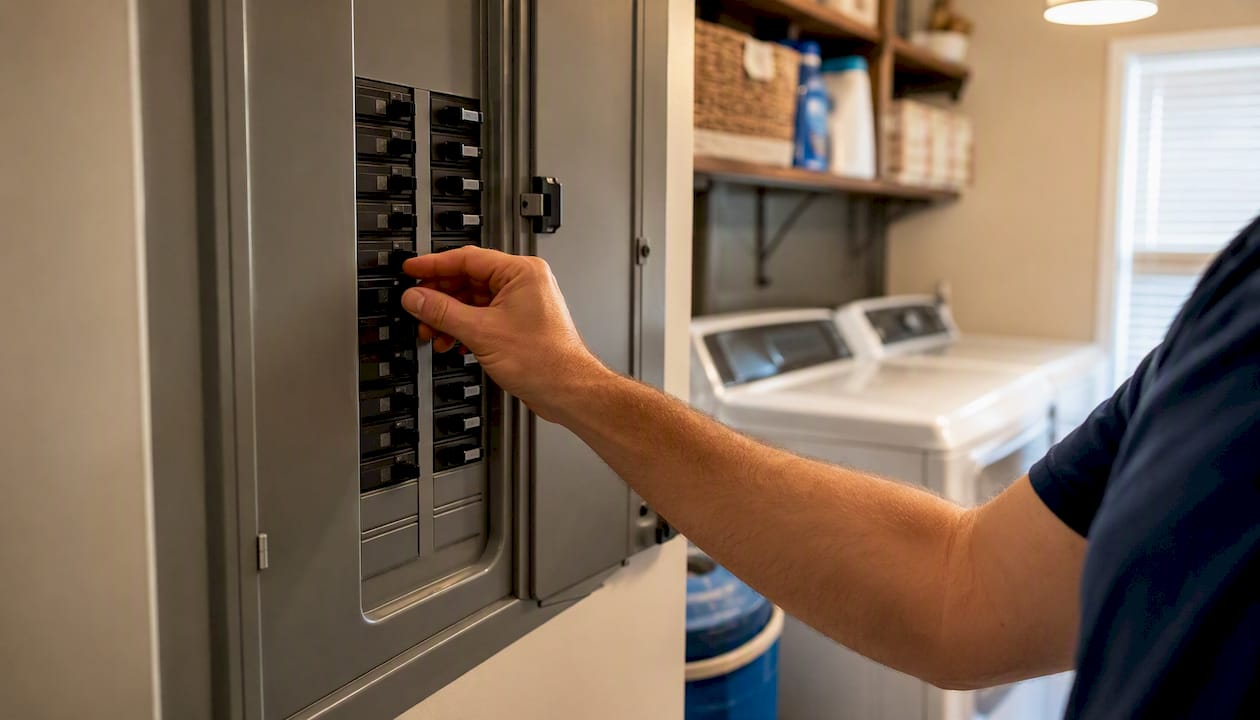
Stop here if the breaker trips again. Repeated trips mean a short circuit or compressor fault that needs a licensed electrician or HVAC tech. Forcing a tripped breaker is a fire hazard.
3. Air filter and supply vents (5–10 minutes)
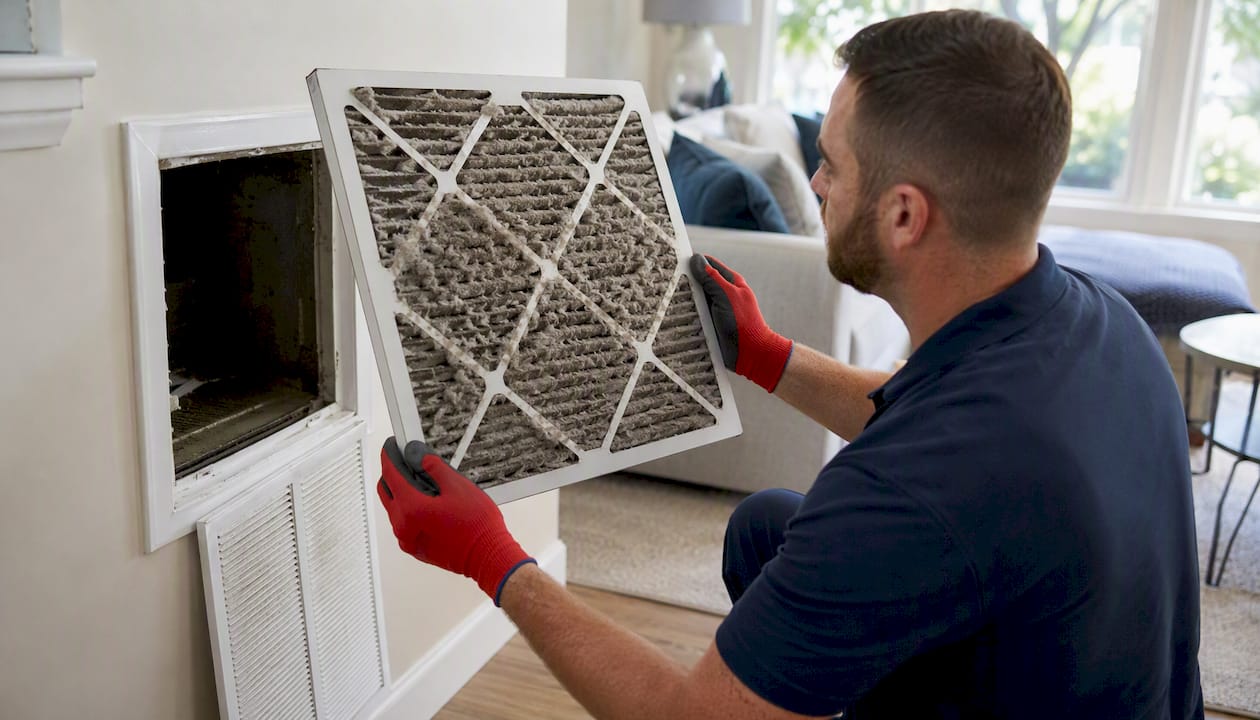
A clogged filter starves the system of airflow and causes frozen coils, which shuts the unit down. Pull the filter and hold it up to light. If you can’t see light through it, replace it. While you’re at it, walk through the house and confirm every supply and return vent is open and unblocked by furniture or rugs.
4. Indoor drain pan and condensate line (10–20 minutes)
Find the indoor air handler and look at the drain pan underneath. Standing water there means the condensate drain is clogged, and most modern systems have a float switch that cuts power to the unit when the pan fills. Clear accessible clogs at the outdoor drain outlet with a wet/dry vac. If the pan is overflowing or you see mold, schedule a professional cleaning.
5. Outdoor condenser unit (10–15 minutes)
Walk outside and look at the condenser. Clear any leaves, grass clippings, or debris from around the unit and from the top grille. Make sure nothing is blocking airflow within 2 feet on all sides. Do not spray water directly into the unit while power is on.
Pro Tip: Before calling for service, try a full 30-minute power reset: turn the thermostat off, flip both the air handler and condenser breakers off, and wait a full 30 minutes. This lets the compressor pressure equalize and the system reset its safety switches. Many units that appear dead will restart normally after this. It’s the single most underused homeowner fix.
For a deeper look at common AC problems homeowners face, the causes behind each symptom are worth reviewing before you call.
What do your AC symptoms actually mean?
Most home air conditioning issues map to a short list of causes. This table covers the most common symptoms, what’s likely behind them, what you can safely try, and when a pro is the only right answer. For warm-air troubleshooting in more detail, the causes are worth understanding before you call.
| Symptom | Likely Cause | Homeowner Action | Call a Pro When… |
|---|---|---|---|
| No power at all | Dead thermostat batteries, tripped breaker | Replace batteries; reset breaker once | Breaker trips again immediately |
| Outdoor unit hums, no fan | Capacitor failure | None safely | Always — capacitors hold lethal charge |
| Runs but not cooling | Dirty filter, low refrigerant, dirty coils | Replace filter; check vents | No improvement after filter swap |
| Frozen coils / ice on unit | Restricted airflow or low refrigerant | Turn off AC, run fan only to thaw; replace filter | Ice returns after thaw and filter change |
| Water leaking indoors | Clogged condensate drain | Wet/dry vac at drain outlet | Recurring leaks or mold present |
| Grinding or banging noise | Loose or failing motor/fan blade | Turn off unit | Always — mechanical failure risk |
| Repeated breaker trips | Short circuit, compressor fault | Do not reset again | Immediately |
| Burning smell | Electrical fault, overheating motor | Turn off system at breaker | Immediately — fire risk |
| Hissing near lines | Refrigerant leak | Do not touch lines | Immediately — refrigerant handling is federally regulated |
A burning smell or repeated breaker trips are not “wait and see” situations. Shut the system off at the breaker and call a licensed technician or electrician before turning it back on.
When should you call a licensed HVAC tech or electrician?
Some problems are homeowner-fixable. Others will injure you, void your warranty, or burn your house down if you touch them. The line is clearer than most guides admit.
Always call a licensed pro for:
- Burning smells or visible sparking from any part of the system
- Breakers that trip more than once
- Hissing sounds near refrigerant lines or visible ice that returns after thawing
- Compressor that won’t start after a full power reset
- Major water leaks or a drain pan that keeps refilling
- Any gas odor near the system
How to vet a technician fast:
- Confirm they hold a state HVAC license and general liability insurance — ask directly before booking.
- For any refrigerant work, ask for their EPA Section 608 certification. Handling refrigerant without it is illegal.
- Ask for the diagnostic fee upfront and whether it applies toward the repair cost.
- Request a written itemized estimate before any work begins.
- During a heat wave, ask for a realistic ETA — honest techs will tell you if they’re booked out.
What to tell the dispatcher when you call:
- System age and model (check the label on the outdoor unit)
- Exact symptoms: what you hear, see, and smell
- Whether you’ve already reset the breaker or changed the filter
- Whether anyone vulnerable (elderly, infant, medical condition) is in the home — this can move you up the priority queue
Before the tech arrives: clear a 3-foot path to both the indoor air handler and outdoor condenser, note the system’s age and any recent symptoms, and turn the system off at the thermostat if it’s making unusual sounds or smells. For emergency AC repair in the Dallas area, Xtremeairservices dispatches licensed, insured technicians and can often provide same-day service.
How much does AC repair cost, and should you repair or replace?
Repair costs vary widely depending on the part and whether you’re calling during a heat wave. Emergency and after-hours service adds a premium to most jobs.
| Repair Type | Typical U.S. Cost Range | Notes |
|---|---|---|
| Diagnostic fee | — | Often applied to repair cost if you proceed |
| Capacitor replacement | — | Common failure; quick fix for a tech |
| Fan motor replacement | $600 | Outdoor or indoor; labor-intensive |
| Refrigerant recharge | — | Requires EPA 608-certified tech; leak fix extra |
| Control board replacement | — | Varies widely by brand |
| Compressor replacement | — | Often triggers replace vs. repair conversation |
| Full system replacement | $5,000 | Depends on size, efficiency, and installation complexity |
The $5,000 rule explained
The $5,000 rule is a rough decision heuristic: multiply the repair cost by the system’s age in years. If that number exceeds $5,000, replacement is usually the smarter financial move. A $600 capacitor job on a 4-year-old system? Repair it. A $1,500 compressor replacement on a 14-year-old system? That math points toward replacement, especially when you factor in the energy savings from a modern high-efficiency unit.
Repair vs. replace checklist:
- System is 12–15 years or older: lean toward replacement
- Repair cost exceeds 50% of a new system’s price: replace
- R-22 refrigerant system (phased out): replacing is almost always cheaper long-term
- Recent utility bills climbing without explanation: efficiency loss signals aging equipment
- Planning to sell the home within 2–3 years: a new system adds resale value
For a detailed breakdown of the repair vs. replace decision, Xtremeairservices has a dedicated guide that walks through the numbers.
Pro Tip: When a technician gives you a written estimate, the parts and labor should be listed separately, and the estimate should specify whether parts carry a manufacturer warranty and whether the labor is guaranteed. An estimate that lists only a single total number gives you no protection if the repair fails.
Homeowners insurance usually won’t cover a mechanical breakdown. Per The Hartford’s guidance, coverage applies only when damage results from a covered peril like hail, lightning, fire, or vandalism. Normal wear and compressor failure are typically excluded, so don’t count on a claim before calling a tech.
Key Takeaways
When your AC breaks during a heat wave, the three immediate priorities are human safety, a fast homeowner triage (thermostat, breaker, filter), and temporary cooling while you arrange professional repair.
| Point | Details |
|---|---|
| Run the 3-check triage first | Check thermostat settings, reset the breaker once, and replace a clogged filter before calling anyone. |
| Know your stop criteria | If the breaker trips again, you smell burning, or hear hissing near refrigerant lines, shut the system off and call a pro immediately. |
| Protect vulnerable people at 85°F | Move elderly, young, or medically vulnerable household members to air-conditioned space when indoor temps hit 85°F. |
| Use the $5,000 rule for repair vs. replace | Multiply repair cost by system age; if the result exceeds $5,000 or the system is 12–15+ years old, replacement is usually the better investment. |
| Xtremeairservices for Dallas-area emergencies | Licensed, EPA-certified technicians available for same-day emergency diagnostics and repair in the Dallas area. |
What technicians actually see during heat wave calls
Heat waves compress everything. Schedules that normally have same-day availability fill up by 9 AM. Emergency fees go up. And the calls that come in split pretty cleanly into two categories: homeowners who haven’t changed their filter in two years and are shocked the system froze, and homeowners with a genuinely failed compressor or capacitor who need a tech on-site fast.
The honest reality is that a significant share of heatwave emergency calls are resolved in under an hour by a filter swap, a drain line clear, or a breaker reset the homeowner hadn’t tried. That’s not a criticism — it’s a reason to run the checklist in this guide before you call, because it may save you a $150 diagnostic fee and a four-hour wait.
When the issue is real, response time matters. A licensed tech who holds EPA Section 608 certification, carries insurance, and can pull a permit if needed is worth the wait over an unlicensed handyman who shows up faster. Refrigerant work done without certification is illegal, and it can void your equipment warranty. Xtremeairservices technicians carry the credentials, and the team triages calls by urgency — vulnerable people in the home move to the front of the queue.
Xtremeairservices is ready for your Dallas-area AC emergency
When the AC is down and the temperature inside is climbing, you need a technician who shows up prepared, not one who has to order parts and come back. Xtremeairservices sends licensed, insured, EPA Section 608-certified technicians to homes across the Dallas area for emergency diagnostic visits. On the first visit, the tech diagnoses the failure, gives you a written itemized estimate, and in most cases completes the repair the same day.
The diagnostic fee applies toward your repair cost when you proceed. If the system is beyond repair, the team can walk you through replacement options on the spot, including energy-efficient units that qualify for utility rebates. For homeowners who want to avoid the next emergency, Xtremeairservices maintenance plans include priority scheduling, seasonal tune-ups, and filter service that catch failing capacitors and clogged drains before they become a 95°F problem.
When you call, have the system’s age and model number ready, describe the symptoms clearly, and mention if anyone vulnerable is in the home. Book your emergency AC repair with Xtremeairservices today.
Useful sources
- Ready.gov — Heat
- EPA — Frequent questions: phasedown of hydrofluorocarbons
- Complete AC Troubleshooting Guide: Fix 12 Common Problems | HVAC Base
- AC Won’t Turn On? 7 Checks to Restore Cooling Fast | HVACDatabase
- AC Breakdown in a Heat Wave? Safety & Repair Guide | HVACDatabase
- How to Repair an Air Conditioner (DIY Fixes That Work) | DIYTalk
FAQ
What should I do first if my AC stops working?
Check the thermostat settings and batteries, then look for a tripped breaker and reset it once. If neither fixes it, replace the air filter and check the indoor drain pan for standing water before calling a technician.
What is the $5,000 rule for AC?
Multiply the estimated repair cost by the system’s age in years. If the result exceeds $5,000, or the system is 12–15 years or older and facing a major repair, replacement is usually the better financial decision.
Is a broken AC considered an emergency?
It depends on who’s in the home. When indoor temperatures exceed 85°F and vulnerable people (elderly, infants, or those with medical conditions) are present, a broken AC is a heat-safety emergency. Call for service immediately and relocate vulnerable household members to a cooled space.
Will homeowners insurance cover a broken AC?
Usually not for mechanical failure. Per The Hartford, standard homeowners policies cover AC damage only when caused by a covered peril such as lightning, hail, fire, or vandalism. Normal wear and compressor failure are typically excluded.
Can I add refrigerant to my AC myself?
No. Refrigerant handling is federally regulated under EPA rules, and only technicians holding EPA Section 608 certification may legally purchase and handle it. Attempting to add refrigerant yourself is illegal and can damage the compressor.